












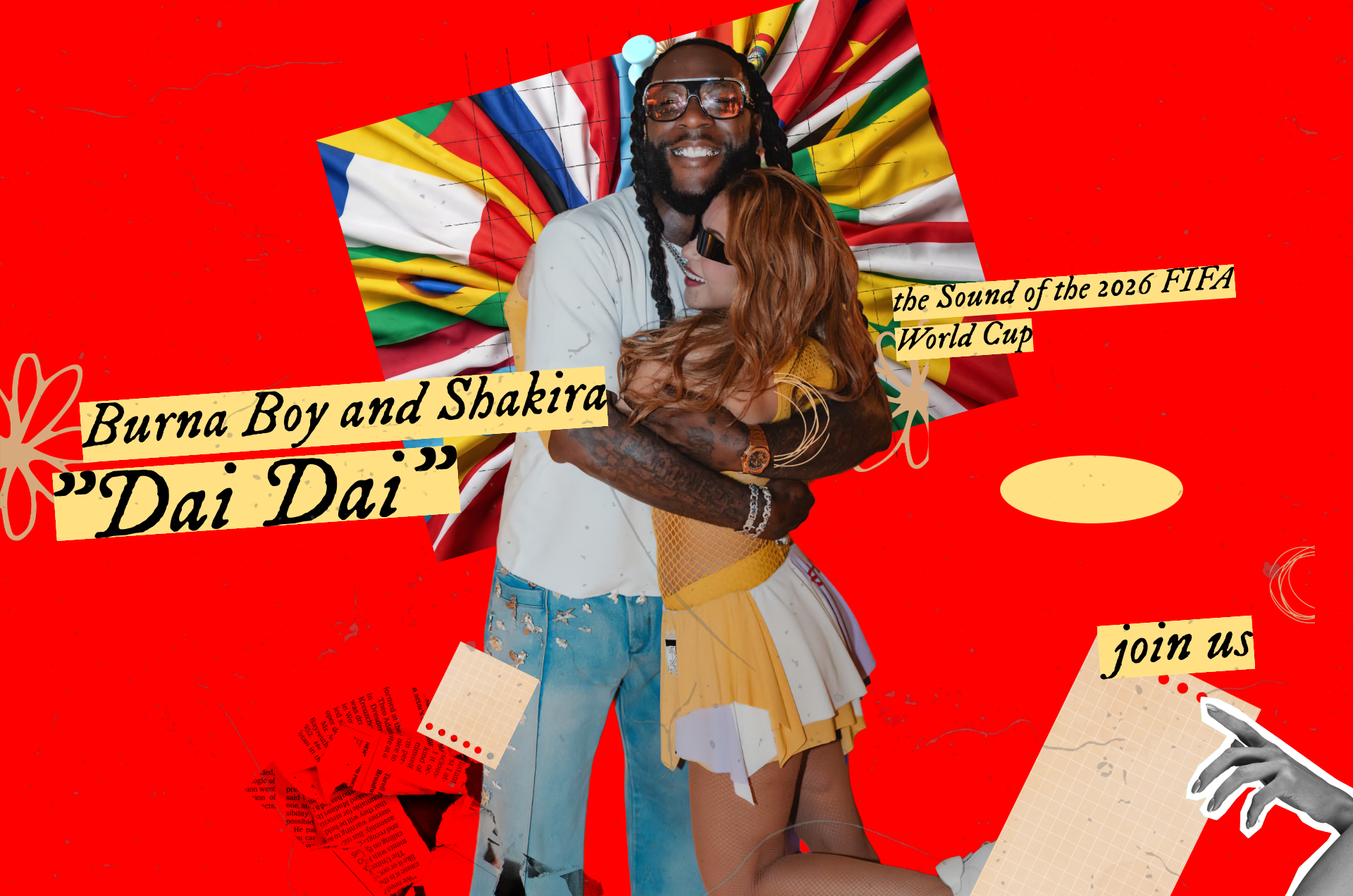
The world has always looked to the FIFA World Cup as the ultimate intersection of athletic excellence, geopolitical pride, and mass cultural exchange. Yet, as the expanded 48-team tournament fields intense battles across Canada, Mexico, and the United States, the conversation off the pitch has been completely dominated by a singular, history-making moment of musical synergy.
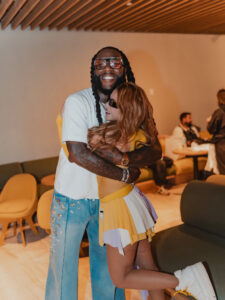 When the news first broke that the Queen of World Cup Anthems, Colombia’s Shakira, was teaming up with Nigeria’s very own Grammy-winning Afrobeats giant, Burna Boy, for the official tournament track, expectations were sky-high. What the world received, however, was an outright cultural earthquake.
Their collaborative anthem, “Dai Dai” (released via Sony Music Latin), has transcended the boundaries of a traditional sports theme. It has grown into a global phenomenon, culminating in an electric, show-stopping live performance at the iconic Estadio Azteca in Mexico City during the opening ceremony. For Black Focus Magazine, this is more than just a pop culture crossover—it is the definitive coronation of African rhythm on the world’s grandest stage.
The Sonic Blueprint of “Dai Dai”
Released worldwide on May 15, 2026, “Dai Dai” (which translates loosely from pidgin/colloquial phrasing to an energetic “Come on, come on” or “Let’s go”) was explicitly engineered to capture the raw, unyielding spirit of the beautiful game. Rather than trying to force Burna Boy into a rigid pop box or stripping Shakira of her signature Latin syncopation, the track acts as a fluid dialogue between two masterclasses of rhythm:
-
The Afrobeats Foundation: Burna Boy anchors the track with a heavy, syncopated drum line that pulls directly from the heart of contemporary Lagos street culture. His signature gravelly, melodic baritone gives the track an earthy grit.
-
The Latin Pop Flare: Shakira accents the production with soaring horn sections, rapid-fire lyrical deliveries, and an infectious club-ready bassline that mirrors the frantic energy of a stadium crowd.
-
Lyrical Homage to Legends: The song’s verses cleverly shout out a cross-generational roster of football gods—including Pelé, Diego Maradona, Cristiano Ronaldo, Lionel Messi, Paolo Maldini, Romário, and Mohamed Salah—uniting fans across eras and geographies.
The global response was instantaneous. By the final week of June 2026, “Dai Dai” officially kicked its way to Number 1 on the Billboard Global Excl. U.S. Chart, proving that the sonic alliance between Latin America and West Africa is currently the most potent force in the music industry.
The Live Spectacle: Pure Magic at Estadio Azteca
While the studio recording is undeniable, the true test of any World Cup anthem lies in its live execution. On Thursday, June 11, 2026, all eyes turned to Mexico City for the tournament’s official opening ceremony.
Following high-energy sets from local heroes Maná, Colombian star J Balvin, and South Africa’s breakout sensation Tyla, the stadium lights dimmed, plunging the historic 87,000-seat coliseum into a sea of neon green and yellow.
Then came the opening notes of “Dai Dai.”
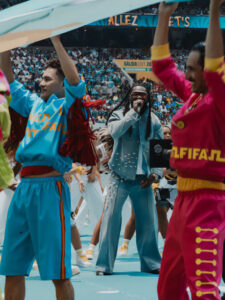
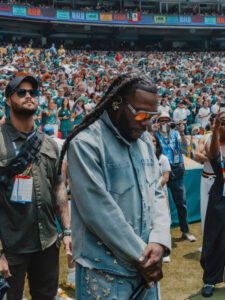
Shakira emerged first, flanked by a massive troupe of contemporary dancers executing sharp, high-tempo choreography. But the stadium truly erupted when Burna Boy walked out from the opposite side of the pitch. Dressed in a custom, avant-garde structural outfit that blended traditional Nigerian fabrics with modern athletic wear, the African Giant exuded pure, unbothered confidence.
The chemistry between the two artists was palpable. Standing center stage, surrounded by giant inflatable World Cup motifs and pyrotechnics that painted the Mexican sky in brilliant shades of emerald and crimson, they delivered a flawless vocal trade-off. Burna’s live vocal control perfectly balanced Shakira’s high-octane physical energy. It wasn’t just a performance; it was a masterclass in cross-continental showmanship that left traditional television broadcasts scrambling to capture every angle.
The Cultural Weight: Afrobeats as a Global Currency
To truly understand why this moment feels so massive for our community, we have to look past the streaming numbers. Historically, major global sporting events relied heavily on Euro-centric or mainstream American pop acts to carry their musical identity.
Shakira broke that mold entirely in 2010 with the historic “Waka Waka (This Time for Africa).” Now, sixteen years later, the narrative has evolved beautifully. Africa is no longer just the inspiration or the setting for the song; an African artist is actively steering the ship as a primary co-creator.
A Milestone for Nigerian Music: While Davido made history by featuring on the 2022 Qatari World Cup soundtrack (“Hayya Hayya”), Burna Boy’s headline status alongside Shakira on the core official anthem signifies a permanent shift. Afrobeats is no longer a localized genre or a passing trend; it is a premium global currency.
Tracking the Evolution of Modern World Cup Anthems
To see how “Dai Dai” stacks up against the modern era of tournament music, let’s look at the trajectory of FIFA’s official flagship tracks over the last few tournament cycles:
| Year | Song Title | Primary Artists | Core Musical Style | Impact & Legacy |
| 2010 | Waka Waka | Shakira ft. Freshlyground | Afro-Colombian / Pop | The gold standard; introduced African dance rhythms to mainstream global pop. |
| 2014 | We Are One | Pitbull ft. Jennifer Lopez & Claudia Leitte | Euro-Dance / Samba | High energy, but criticized locally for lacking genuine Brazilian depth. |
| 2018 | Live It Up | Nicky Jam ft. Will Smith & Era Istrefi | Reggaeton / Ska | A unique genre mashup that struggled to capture global stadium longevity. |
| 2022 | Hayya Hayya | Trinidad Cardona, Davido, & AISHA | R&B / Afrobeats | A monumental step forward for African representation in the Middle East. |
| 2026 | Dai Dai | Shakira & Burna Boy | Afro-Fusion / Latin Pop | First track to hit #1 on global charts mid-tournament; absolute synthesis of two distinct markets. |
The Road to the Halftime Show
The journey doesn’t stop in Mexico City. FIFA recently shook the sports world by announcing that the 2026 Final on July 19 will feature the first-ever official Halftime Show in World Cup history. Shakira is already confirmed to co-headline the historic spectacle alongside massive global icons.
With “Dai Dai” completely dominating airplay from Burnaby to Johannesburg, rumors are already circulating intensely behind the scenes that Burna Boy will make a surprise appearance during the final broadcast to close out the tournament in front of a projected television audience of over one billion viewers.
For now, the music continues to serve as the perfect backdrop to the high-stakes drama unfolding on the pitch. Whether you are blasting it from your car speakers along Kingsway or hearing it echo through the stadium concourses, “Dai Dai” is the undisputed soundtrack of our summer.
The Black Focus Fan Zone: Have Your Say!
A collaboration of this magnitude belongs to the culture, and we want to know exactly how the Black Focus Magazine community is feeling about this historic link-up.
Drop a comment below and let us know your thoughts:
The Anthem Verdict: Where does “Dai Dai” rank in your all-time favorite World Cup songs? Can it ever truly dethrone the legendary legacy of “Waka Waka,” or has it already surpassed it?
The Performance Review: What did you think of Burna Boy’s stage presence and outfit during the live opening ceremony at Estadio Azteca? Did he represent the culture the way you expected?
The Halftime Prediction: Do you think FIFA will bring Burna Boy back out for the historic, first-ever grand finale halftime show on July 19?