

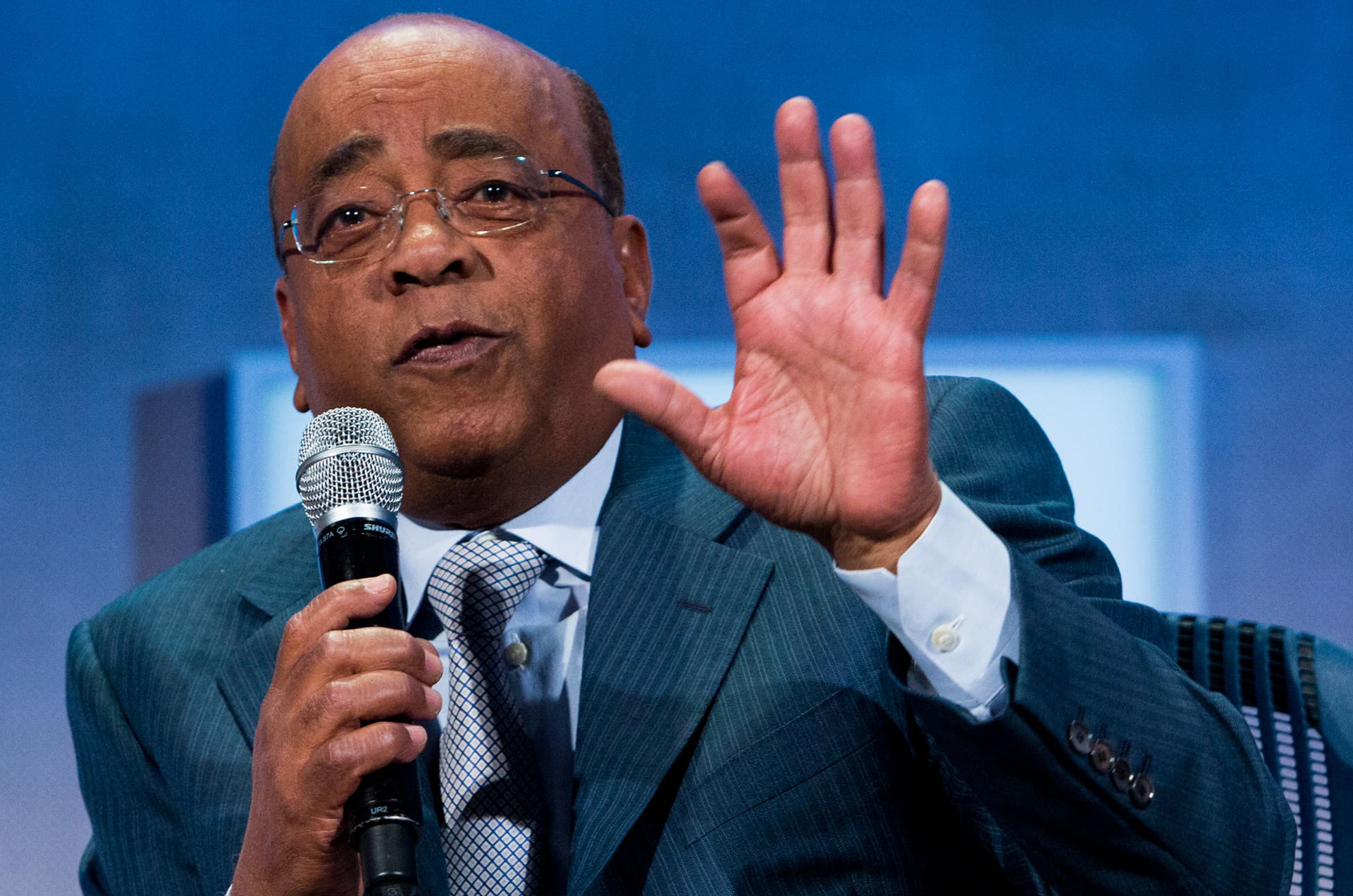
Mo Ibrahim’s name is synonymous with visionary entrepreneurship, groundbreaking innovation, and transformative impact on Africa’s telecommunications landscape. As the founder of Celtel, he not only built a business that revolutionized communication across the continent but also laid the foundation for a telecom empire later valued at an astonishing $10.7 billion. From his Sudanese roots to becoming a billionaire and philanthropist, Mo Ibrahim’s story is one of bold ambition, strategic brilliance, and a deep commitment to Africa’s sustainable development.
From Humble Beginnings to Global Visionary
Born in 1946 in Sudan, Mo Ibrahim showed early promise in academics and leadership. He pursued engineering studies at the University of Alexandria in Egypt before moving to the United Kingdom to study electrical engineering and computer science at University College London. His educational background laid a solid technical foundation, but it was his entrepreneurial spirit and vision for Africa’s future that set him apart.
Ibrahim’s career began with stints at major telecommunications companies including British Telecom and Cellnet, where he gained valuable insight into the industry. However, his heart remained with Africa—a continent where the vast majority of people lacked reliable communication infrastructure. Recognizing the transformative power of mobile technology, he envisioned a future where Africans could connect, communicate, and participate fully in the global economy.
The Birth of Celtel: Connecting Africa
In 1998, Mo Ibrahim founded Celtel International with a clear mission: to provide affordable, reliable mobile phone services across Africa. At a time when most African countries had minimal telecom infrastructure, exorbitantly priced services, and limited coverage, Celtel’s entry was groundbreaking.
Pioneering Impact
- Expansive Reach: Celtel launched operations in more than 14 African countries, including Nigeria, Kenya, Tanzania, Uganda, and Zambia.
- Subscriber Growth: At its peak, Celtel boasted over 24 million subscribers, many of whom were accessing mobile communication for the first time.
- Rural Access: The company made mobile telephony accessible to rural and underserved communities, bridging the urban-rural digital divide.
- Job Creation: Celtel generated thousands of direct and indirect jobs, contributing significantly to local economies.
- Economic Empowerment: By enabling communication, Celtel empowered small businesses, farmers, and entrepreneurs to connect, trade, and grow.
Celtel’s business model emphasized affordability, accessibility, and quality—a combination that transformed the African telecom landscape. The company’s success proved that investing in African markets was not only feasible but highly profitable.
The $3.4 Billion Sale and the Rise of a Telecom Giant
In 2005, Mo Ibrahim made a landmark decision by selling Celtel International to the Kuwaiti telecommunications operator Mobile Telecommunications Company (MTC) for $3.4 billion. This deal was one of the largest African business transactions at the time, signaling to the world the immense potential of Africa’s telecom market.
Following the acquisition, Celtel became a core asset in MTC’s expansion strategy across Africa and the Middle East. The company was rebranded as Zain Group, rapidly growing into a telecom powerhouse operating in 24 countries.
The $10.7 Billion Bharti Airtel Acquisition
In 2010, the Indian telecom giant Bharti Airtel acquired Zain Group’s African operations for a staggering $10.7 billion—one of the largest cross-border telecom deals in history. This acquisition underscored the value and explosive growth of the African telecom sector, much of which Mo Ibrahim helped pioneer.
The deal expanded Airtel’s footprint to Africa, providing the infrastructure to serve hundreds of millions of customers and further accelerating mobile connectivity across the continent.
More Than Business: Philanthropy and Governance
Mo Ibrahim’s impact goes well beyond his business achievements. After stepping back from day-to-day telecom operations, he turned his focus toward philanthropy and promoting good governance in Africa.
The Mo Ibrahim Foundation
Founded in 2006, the Mo Ibrahim Foundation aims to improve governance and leadership on the continent—areas Ibrahim believes are crucial for Africa’s long-term development.
- Ibrahim Index of African Governance: This comprehensive index tracks and evaluates the performance of African governments in areas such as security, rule of law, transparency, and human development. It provides data-driven insights to encourage accountability and reform.
- Ibrahim Prize for Achievement in African Leadership: This prestigious award honors African heads of state who demonstrate exceptional leadership, governance, and service. The prize incentivizes good governance and peaceful transitions of power.
- Advocacy and Research: The foundation supports research initiatives and public discourse on governance, democracy, and sustainable development.
Through these efforts, Ibrahim champions transparency, accountability, and effective leadership as the pillars for Africa’s progress.
Legacy and Inspiration
Mo Ibrahim’s journey is a testament to the power of vision, resilience, and dedication. His legacy can be seen in several dimensions:
Transforming Communication
By building Celtel, Ibrahim transformed how millions of Africans communicate, trade, and engage with the world. Mobile phones have become indispensable tools for financial transactions, education, healthcare, and social connectivity—revolutionizing everyday life.
Economic and Social Impact
Celtel’s success demonstrated the viability of investing in Africa, inspiring entrepreneurs and international investors alike. The telecom boom has catalyzed economic growth, job creation, and technological innovation across the continent.
Role Model for African Entrepreneurs
Mo Ibrahim’s story inspires countless African entrepreneurs and business leaders. His commitment to ethical leadership and social responsibility highlights how business success can be aligned with positive societal impact.
Advocate for Good Governance
Through his foundation, Ibrahim has placed governance at the center of Africa’s development narrative, emphasizing that sustainable growth requires strong institutions and leadership.
Mo Ibrahim Today: Continuing the Mission
Even decades after founding Celtel, Mo Ibrahim remains an influential voice in African development. He frequently speaks at global forums, offering insights on governance, economic growth, technology, and the future of Africa.
His vision continues to shape conversations around innovation, leadership, and the role of the private sector in driving inclusive progress.
Join the Conversation
How has improved telecommunications transformed your community or business? What role do you think visionary leaders like Mo Ibrahim should play in Africa’s future?
Share your stories, thoughts, and perspectives in the comment section below. Your insights could be featured in Black Focus Magazine’s next edition.
Black Focus Magazine – Highlighting African Excellence and Innovation
We celebrate trailblazers like Mo Ibrahim who redefine possibilities, break barriers, and inspire a new generation of African leaders. Stay connected with Black Focus Magazine for more stories of innovation, leadership, and transformative impact shaping the continent’s future.
Additional Resources
- Mo Ibrahim Foundation: https://mo.ibrahim.foundation
- History of Celtel: Research reports on African telecom growth
- Bharti Airtel Africa: https://www.airtel.africa
- African Tech Startups: Insights on how telecom infrastructure fuels innovation
Mo Ibrahim’s journey from a Sudanese engineer to a billionaire entrepreneur and philanthropist is a beacon of hope and progress for Africa. His legacy reminds us that with vision, integrity, and commitment, Africa’s future is boundless.


