

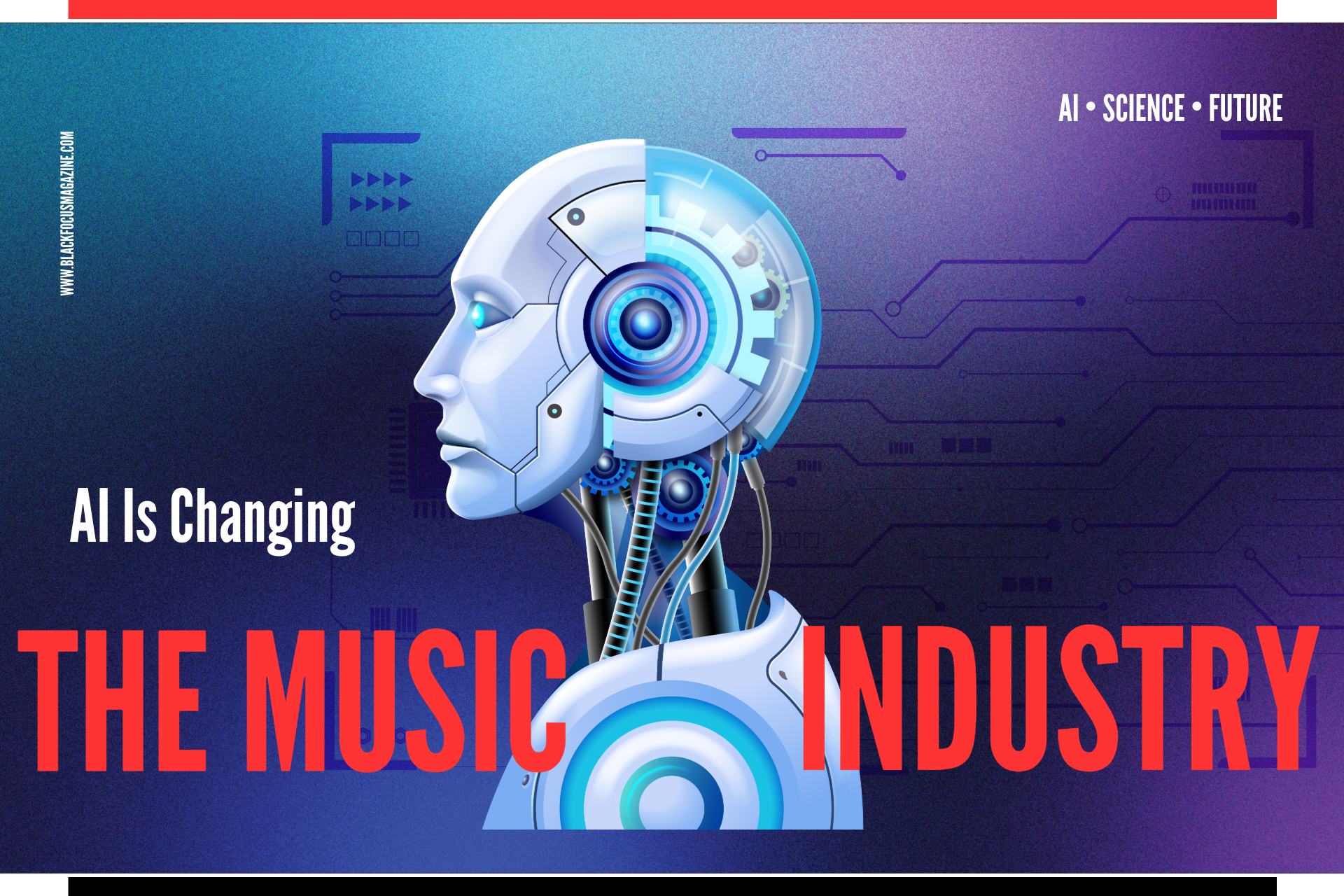
The music industry has always been a dynamic field, evolving alongside technology and culture. Today, Artificial Intelligence (AI) is ushering in a revolutionary era that is reshaping how music is created, produced, distributed, and experienced. From generating fresh beats to personalizing listening experiences, AI is transforming the entire music ecosystem in ways that both excite and challenge artists, producers, and fans alike.
For the Black community—deeply rooted in musical innovation and culture—this technological wave presents new opportunities and questions about creativity, ownership, and equity. In this article, we explore the many ways AI is changing the music industry and what it means for artists, producers, and listeners.
AI as a Creative Partner in Music Production
One of the most striking impacts of AI in music is its role as a creative collaborator. AI-powered tools can now compose melodies, generate beats, and even write lyrics, offering artists new ways to experiment and innovate.
- Music Composition: AI algorithms analyze vast databases of music to create original compositions in various genres. Tools like OpenAI’s MuseNet and Google’s Magenta can compose complex pieces, blending styles from classical to hip-hop. These systems learn patterns, harmonies, and rhythms from thousands of songs, generating fresh, sometimes surprising musical ideas.
- Beat Making: Producers use AI-driven software to craft unique beats quickly, helping them break creative blocks or explore new sounds. AI can generate drum patterns, basslines, or chord progressions, which artists can then customize, accelerating the creative process without sacrificing originality.
- Lyric Generation: Some AI programs generate lyrics based on themes, moods, or keywords, providing a fresh source of inspiration for songwriters. While still evolving, these tools help overcome writer’s block or suggest novel lyrical directions.
For Black artists, who have historically been pioneers in genres like jazz, blues, hip-hop, and R&B, AI offers a new palette to extend their creative expression. However, it also raises questions about the role of human artistry versus machine-generated content and the preservation of cultural authenticity.
Enhancing Music Production and Mixing
Beyond creation, AI tools are revolutionizing the technical aspects of music production:
- Automated Mixing and Mastering: Services like LANDR and iZotope use AI to analyze tracks and apply professional-level mixing and mastering, reducing the need for costly studio sessions. These platforms assess frequency balance, volume levels, and dynamic range to produce polished, radio-ready sound.
- Sound Enhancement: AI can clean up audio, remove noise, and even restore old recordings, preserving musical heritage. This is especially important for archival projects that seek to digitize and protect historic Black musical recordings.
- Personalized Production: AI can tailor soundscapes to specific audiences or environments, optimizing how music is experienced on different devices—from earbuds to concert halls. This adaptive approach ensures listeners receive the best audio quality regardless of context.
These advancements democratize access to high-quality production tools, empowering independent Black artists and producers to compete on a global stage without needing expensive equipment or facilities.
Revolutionizing Music Distribution and Marketing
AI is also changing how music reaches listeners and how artists grow their audience:
- Recommendation Algorithms: Streaming platforms like Spotify, Apple Music, and YouTube use AI to analyze listening habits and recommend songs, helping artists find new fans. These personalized playlists can significantly boost an emerging artist’s exposure.
- Targeted Marketing: AI-driven analytics allow artists and labels to identify their audience demographics and preferences, creating personalized marketing campaigns. By understanding listener behavior, artists can tailor content, release strategies, and promotional efforts more effectively.
- Social Media Engagement: AI tools help manage content scheduling, fan interaction, and trend analysis on platforms critical for music promotion. This automation frees artists to focus on their craft while maintaining an active online presence.
For emerging Black artists, these tools can level the playing field, enabling them to connect directly with audiences without relying solely on traditional gatekeepers like record labels or radio stations.
AI in Live Performances and Virtual Experiences
Live music is an essential part of the industry, and AI is beginning to reshape this space too:
- Virtual Artists and Holograms: AI-created virtual performers or holograms of legendary artists allow for innovative concert experiences. These digital avatars can perform new material or recreate historic performances, expanding fan engagement.
- Real-Time Visuals and Soundscapes: AI can generate visuals and adapt sound during live shows based on audience reactions and environmental factors, creating immersive, dynamic performances.
- Augmented Reality (AR) and Virtual Reality (VR): AI-powered AR/VR experiences let fans attend concerts virtually, breaking geographical barriers and creating new revenue streams for artists.
These technologies open new fan engagement opportunities and income sources for artists, including those from the Black community seeking innovative ways to amplify their cultural impact.
Ethical and Economic Considerations
While AI offers exciting possibilities, it also raises important ethical and economic questions:
- Copyright and Ownership: Who owns AI-generated music? How are royalties distributed when machines contribute to creation? Current laws struggle to address these complexities, creating uncertainty for artists.
- Job Displacement: Will AI reduce demand for human composers, producers, and sound engineers? While AI can augment creativity, fears remain about the future role of human professionals.
- Bias and Representation: AI systems trained on existing music data may perpetuate biases or underrepresent marginalized voices. Ensuring diversity in training data and equitable access to AI tools is critical for fairness.
Addressing these challenges requires ongoing dialogue between artists, technologists, industry stakeholders, and policymakers to ensure AI serves as a tool for empowerment rather than exclusion.
The Future of AI and Music in the Black Community
The Black community has been at the forefront of musical innovation for decades, influencing global culture profoundly. As AI reshapes the music industry, Black artists, producers, and entrepreneurs have an opportunity to harness this technology to expand creative boundaries, tell new stories, and build sustainable businesses.
Education and access are critical. Investing in AI literacy and tech resources can help Black creatives lead in this evolving landscape, ensuring their voices and innovations remain central.
How You Can Engage with AI in Music
Whether you are a musician, producer, fan, or industry professional, here are ways to explore and benefit from AI in music:
- Experiment with AI music tools to enhance your creative process.
- Use AI-powered platforms for music production, distribution, and marketing.
- Join communities and workshops focused on AI and music technology.
- Advocate for fair policies that protect artists’ rights in the age of AI.
Join the Conversation
We want to hear from you! How has AI impacted your music experience or creative process? Have you used AI tools in your music career or enjoyed AI-driven music platforms? Share your stories, insights, and questions in the comment section below. Your voice enriches this important conversation.
Thank you for reading Black Focus Magazine. Stay connected for more content celebrating innovation, culture, and empowerment.
Resource for Further Exploration
For a comprehensive overview of AI’s impact on music—including tools, ethical considerations, and industry trends—visit the Music Business Association’s AI and Music Report:
➡️ Music Business Association AI and Music Report
This resource provides valuable insights from industry leaders and case studies illustrating how AI is shaping the future of music.


